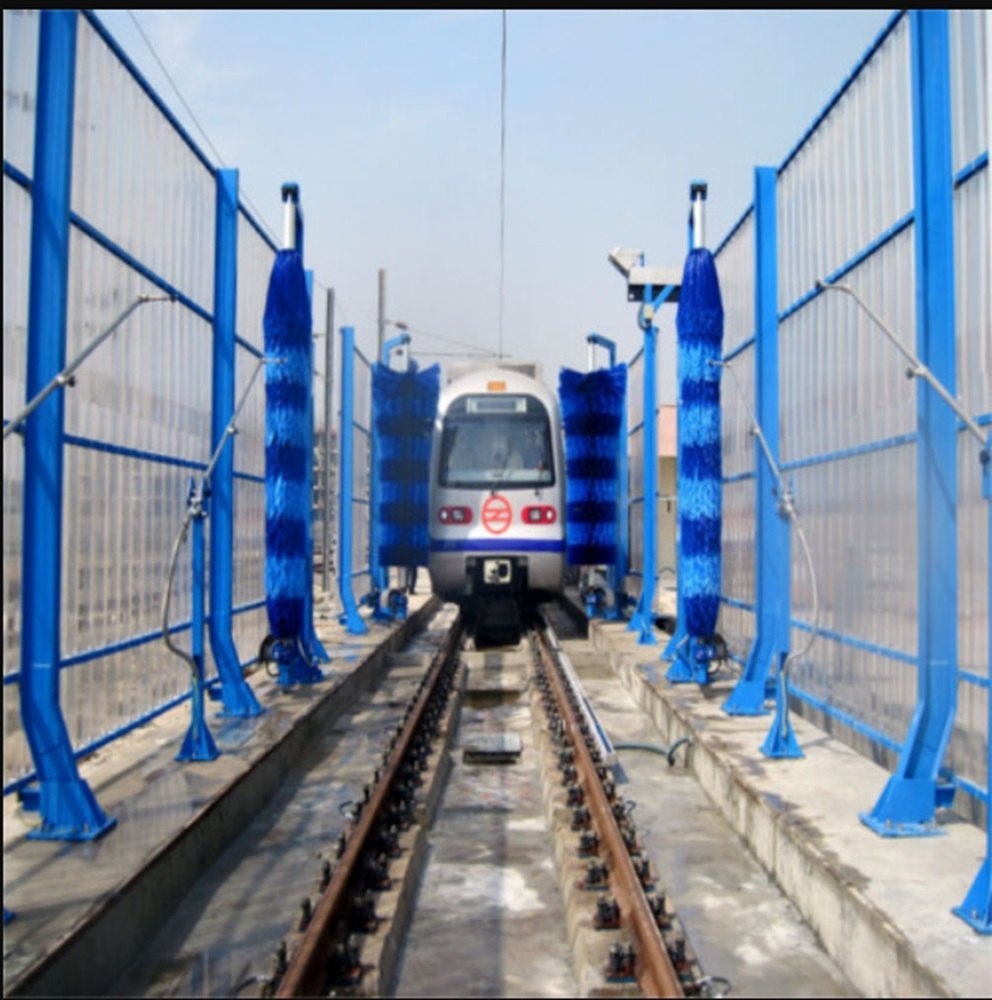
An automatic train wash is a high-performance, modular system designed to clean the exterior of rail vehicles—including locomotives, passenger coaches, metros, and trams—with minimal manual intervention. These systems utilize advanced sensors and programmable logic controllers (PLCs) to automate the entire cleaning cycle, typically completing a full train wash (e.g., 24 coaches) in approximately 15 to 20 minutes
Core Functionality & Types
Stationary (Drive-Through) Systems: The train is driven through a fixed washing plant at a constant low speed (usually 3–5 km/h).
Mobile (Rollover/Gantry) Systems: The train remains stationary while the washing equipment moves back and forth along the length of the train on rails.
Unidirectional vs. Bidirectional: Systems can be configured to wash trains coming from one direction or both, often featuring duplicated equipment for bidirectional entry.
Standard Washing Cycle
Pre-Wash/Soak: High-pressure water jets and sensors detect the train’s entry, applying water to loosen surface dirt and grime.
Detergent Application: Specialized chemical arches spray alkaline or acidic soaps tailored to the type of dirt (e.g., iron oxidation from overhead lines).
Brush Cleaning: Multiple sets of vertical, horizontal, and eave brushes (often made of non-scratch polyethylene or foam) scrub the front, sides, and roof corners.
Undercarriage/Bogie Wash: Targeted high-pressure nozzles clean the underframe, bogies, and wheel areas to prevent salt and grime buildup.
Final Rinse: Fresh or demineralized water is used to remove all chemical residue and prevent water spots.
Drying: High-speed blowers or air knives blast air at the train to remove moisture and ensure a polished finish.
Key Technical Features
Water Conservation: Modern plants include effluent treatment plants (ETP) that recycle up to 80% to 100% of wastewater for reuse in initial wash stages.
PLC & SCADA Control: Systems are managed from a centralized control room, allowing for real-time monitoring of water levels, brush pressure, and diagnostic reports.
Profile Recognition: Optical laser or RFID sensors identify the train model and automatically adjust brush positions to follow the specific contour of the vehicle.
Harsh Environment Support: Features like heating coils and insulated hoses prevent the system from freezing in sub-zero climates.
Benefits for Operators
Efficiency: Significantly faster than manual cleaning, allowing for high throughput (up to 200 carriages per hour in some systems).